
Make Good is a podcast from Heath Ceramics, co-hosted by Cathy Bailey—Heath’s co-owner and brand steward—and Simone Silverstein, who has worked with Cathy for over 20 years to develop Heath’s brand and tell its story.
Small disclaimer: We’re not in a sound studio. We have a dog named Ponch wandering around.
The conversation below has been edited for length and clarity.
Simone: Today’s episode is called In Good Company — it’s about collaboration, community, and the support makers give one another. Our guest, Natalie Chanin, is a master maker, community builder, and friend and collaborator of Heath’s. Cathy, tell us about Natalie.
Cathy: Natalie is the founder of Alabama Chanin and a nonprofit called Project Threadways, based in Florence, Alabama, working through the lenses of fashion, textiles, and community. Natalie and I have been collaborators for a long time — back in 2011, we started dreaming up a dinnerware collection with Heath Ceramics, and it’s evolved ever since.
Simone: Natalie, we do our best to describe you, but how would you describe yourself?
Natalie: That’s complicated. I spend a lot of time thinking about the connection between our work and Heath’s. I’ve spent the last 25 years thinking about making a social architecture—connecting making to place. So I might describe myself as a cultural practitioner.
We do so many things at Project Threadways that it’s sometimes confusing, even to me—I’m designing, I built a business that became a nonprofit, so now I’m learning to be an executive director and development officer while still being creative director. It’s hard to think of myself in one way, but our work leans heavily into the humanities.
Simone: I set you up a bit with that question, because it’s obvious you have so many talents—fashion designer is in there, but it’s just a tiny kernel of who you are. Heath has an objective called “In Good Company”: we support the design and craft communities who create with a strong human and cultural connection and a deep respect for materials, tools, and traditions. That’s a commitment Heath is making for the life of the company.
Cathy: This is one of nine objectives that are integral to how we lead Heath—we’re on number six of nine: In Good Company.
Simone: What comes up for you in that wording?
Natalie: It’s always astounded me—we work with fabric, Heath works with clay, we have different tools, but how we think about materials is so connected. I’ve always loved the story of where you get your clay and how it’s shaped by the hands of people who’ve been with your organization for decades. It surprises me to remember we’ve been doing this for 25 years. Our material is primarily cotton, which is such an integral part of our community here in Alabama—it has a long, brutal, complicated past. These materials have become a point of inquiry for looking at our community over time—where it came from and where it’s going.
When I think of good company, I think of everyone who’s been with us—many early artisans and oral history participants have passed away, and new young people are coming up who want to tell these stories. There are these circles of connection between other practitioners using materials as a lens to see their places. It’s this big web of beautiful company.
Cathy: That web helps set your intention and true north. It’s rare and beautiful these days to have that tangible connection to materials—in business, it often breaks down to a line on a spreadsheet. But you’ve always shined a spotlight on the cotton, even growing your own and connecting with its history. That’s inspired me at Heath to remember how materials—and people—are woven into community.
Simone: I’m compelled to ask—how did you two meet? This web seems to have started years ago, around a making circle.
Cathy: We had a mutual friend. It was a friend who connected us around an idea about making.
Natalie: Back in the early 2000s, there weren’t many people thinking about sustainability and building local programs of making, so a small group of us kept getting invited to the same conferences. We called ourselves the Bureau of Friends. But the day I really feel we connected was at the Heath factory in Sausalito. Another friend, Ramon, was working with you that day, so I got to spend the whole day playing with Heath plates—I put together about 275 place settings.
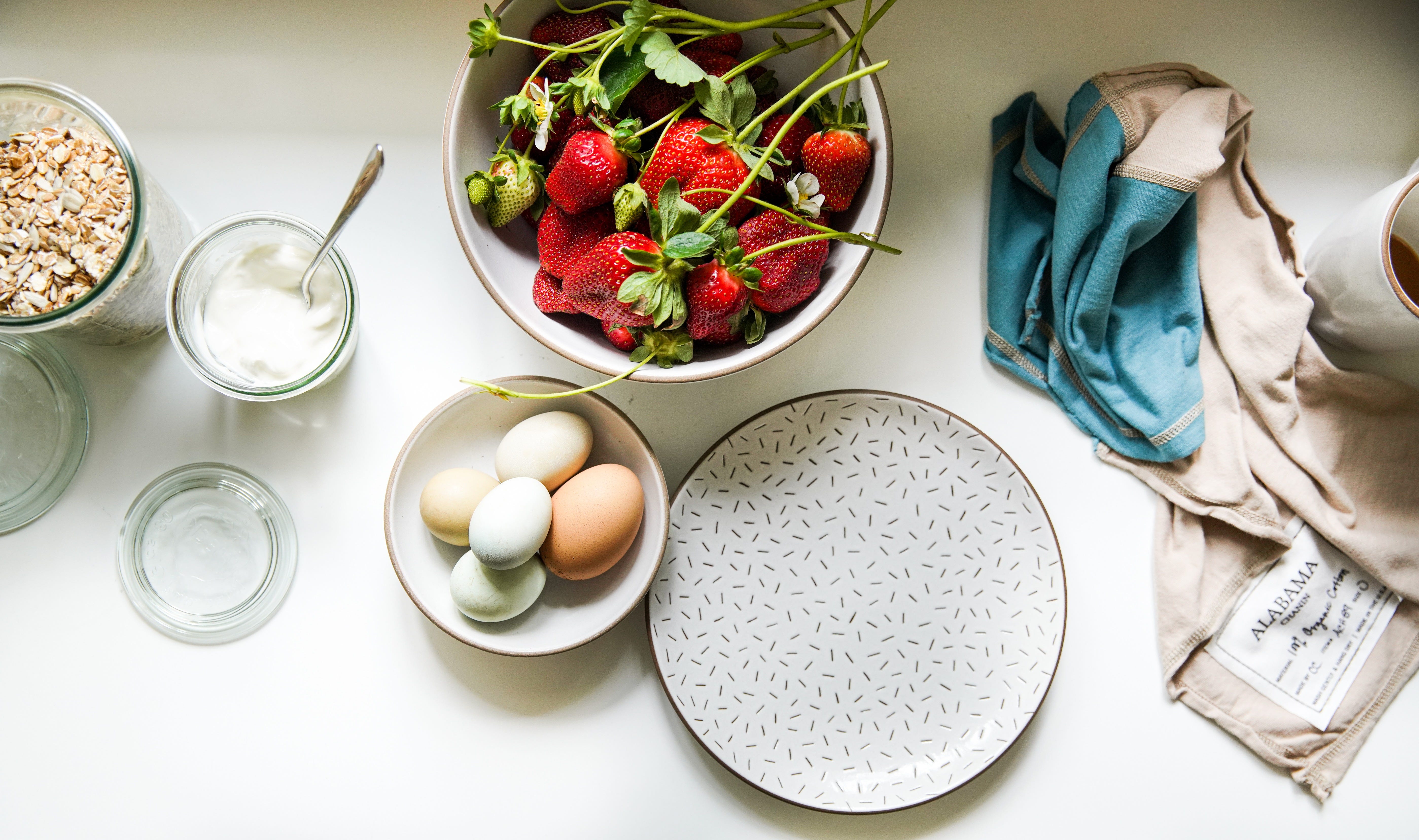
They let me bring some back to the shop. We work a lot with patterns—very slowly, one stitch at a time—and I asked Cathy, “Have you ever thought about putting a pattern on these plates?” She said, not really, but let’s talk about it. It took several years to actually make them. What blew me away was that Cathy and Robin didn’t just do something simple—they developed an entire etching system that spoke to our work.
Those development years weren’t idle—we were dreaming, playing, having conversations. We both had young children a year apart who developed a beautiful relationship—they loved trains, otters, and dogs. It’s felt like a poetic connection meant to be. There’s a research method in history called prosopography—studying groups of people together—and I feel like Cathy and I just landed in these overlapping circles that became their own world.
Cathy: I remember going out to Florence and getting the deep dive—meeting the women stitching, seeing the work. It was stunning that hand-stitched garments could be structured into an entire system, not just individual artisan work. Seeing that inspired me to think we could find a different method for creating a graphic on a plate, outside the normal process.
Those poetic moments open your mind and push your creativity to go against “it has to be done this way.” We developed a technique where you can’t make very many plates—but you don’t make many garments that way either. They’re rare and special, and that was inspiring.
Simone: I know a lot of people come to Heath with ideas of what Heath should make. I’m struck by the fact that you were compelled to follow this one. Why certain collaborations and not others?
Cathy: You need to spend time with someone and be on the same wavelength—curiosity, openness, pushing each other. A lot of people come with an already-developed vision, without curiosity about what makes their process interesting. With Natalie, the real “good company” was being on the same wavelength. It didn’t start as a high-craft, time-consuming thing—we were just trying to make patterns that honored the feel of Natalie’s work, but it took a turn because of her curiosity and her simple ask: keep playing.
Natalie: A lot of people don’t think about building systems in creative work. I think of myself as much a systems designer as a fashion designer—figuring out systems that work has been critical to our survival. Walking through Heath and seeing the molds, I see the same thing. Both our organizations are built on systems, which makes us more like scientists working together to figure out a path. We all love problem-solving and building systems.
Cathy: You can hold that tension between the creative and the system—that’s often the sweet spot for companies like ours, when a lot of asks are just about the creative side.
Natalie: Like the work you did with House Industries—you can see there’s a system built to make those things, and even if a viewer can’t articulate it, the feeling is there, and it gives the work such life.
Simone: What does it look like when a system is missing?
Cathy: It might look like just the creative part, siloed from other considerations, feeling separated from the aesthetic.
Natalie: Originally, we worked with stencils—paint through a stencil onto the plate and move on. But Cathy and Robin, both systems thinkers, took it further and figured out how to actually carve into clay.
One of my favorite days of the whole collaboration was teaching the kids how to carve—delicately, not too light, not too deep. Some of my favorite things at home are the plates the kids made that day. Cathy once spoke at one of our symposia, around the time of a fire, about what you’d grab from your house if it were on fire—those simple plates would be among the first things I’d take.
Simone: Cathy describes you as having an incredible ability to bring people together—not just talking about it, but actually making it happen. Does systems thinking play a part in that?
Natalie: It might just be stubbornness and fearlessness—being willing to ask, again and again. Every year, our Symposium in Florence keeps growing. It’s not easy to get to Florence, Alabama—it’s a pilgrimage, and maybe that’s part of what makes it beautiful.
We look at humanity through a different lens each year—it’s not just about textiles, but material culture, people, and civic imagination. The year Cathy spoke, the theme was food, clothing, shelter—what we actually need to sustain life. We had an incredible lineup of speakers reminding us of our humanity.
This year’s theme was cotton—people who didn’t think it would interest them ended up loving it and hearing phenomenal stories, including from Black farmers in the South who grow cotton. It’s one of the few times of year you can really make space for imagination and the 10,000-foot view.


Cathy: The symposium has been so impactful for me—it feels like the start of my next year. I come away filled with new connections and ideas. People from very different walks of life end up connected by the end. It feels like the symposium develops through the people Natalie meets along the way—she gets an idea and gives it space to grow.
Natalie: She’s talking about Stephen Satterfield, doing phenomenal work in North Carolina with an organization called COMOCO, working with fifth-generation Black landowners. Life is an adventure—these people land in your life and become bigger parts of it. That’s what “in good company” means—you meet people who are part of the good company, and you want to learn what they do too.
I wrote this down thinking about this talk: when people cook together, build together, garden together, or make pottery together, they create relationships that wouldn’t exist otherwise. The object matters, but the relationships matter more. I think that’s what Symposium has become—we cook, we make, we talk, we share.
When people cook together, build together, garden together, or make pottery together, they create relationships that wouldn’t exist otherwise.
– Natalie Chanin
Simone: Do you two want to talk about your upcoming collaboration—a retreat?
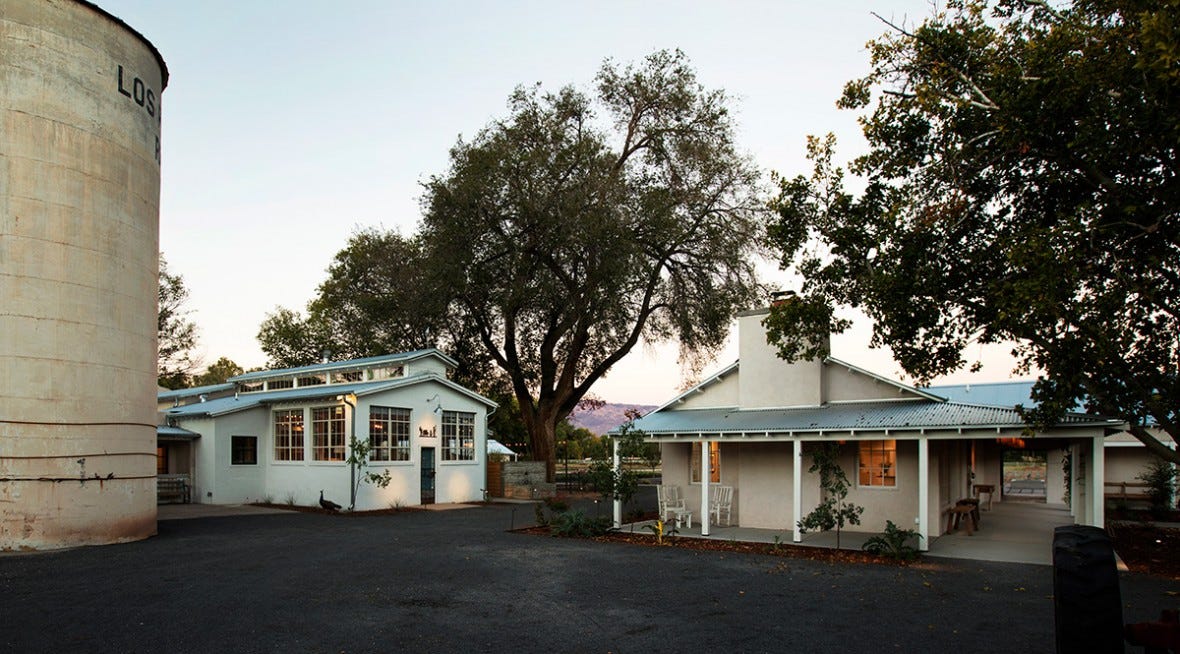
Cathy: Yes — in a couple of days, we’re doing a creative retreat in Albuquerque at a place called Los Poblanos, which is also part of our In Good Company community. It’s our second year doing this retreat together, and I’m bringing some clay.


Natalie: As creative directors, sometimes there’s no space left for your own creativity. We landed at Los Poblanos while collecting oral histories or visiting the International Folk Art Market—sat outside eating popcorn, drinking rosé, watching the sunset, and thought: we should come back here.
We were on a trip, trying to find room for creativity, and had that moment when we wanted more of this — so we decided to bring people along. It started selfishly, but we realized other people working in creative fields must feel the same way. The only feedback from year one was "more time."
Shout-out to Los Poblanos—they even sell a “movie night” box people can order at home. And the International Folk Art Market in Santa Fe happens the week before—Cathy and I try never to miss it.
Cathy: The Folk Art Market brings together incredible craft from all over the world—every year we’re amazed by the similarities in longstanding, often indigenous traditions. It’s the perfect place to explore that in Santa Fe.
Simone & Cathy: Thank you so much, Natalie—always a joy.
Natalie: I was so nervous, but you made it easy. Thank you for allowing me to be in good company.
Episode Mentions
Hey, Santa Fe, a few upcoming events:
July 9–12: Visit the Folk Art Market.
July 13–17: Creative Retreat with Catherine and Natalie at Los Poblanos.
A few spots remain.July 15: Meet the Makers, a talk with Catherine and Natalie at T&R about Land, Craft and Community.
Listen to Natalie tell her story on The Moth.
Enjoy a digital recording of Project Threadways 2026 Symposium
It’s always inspiring to speak with Natalie—well spoken, thoughtful. She epitomizes In Good Company.
Next month, we’re sending out a Substack with our favorite summer reading—subscribe to get it in August.
In September, we’re back with Clay Studio Director Tung Chiang to talk about an upcoming show in an episode called Honestly Interesting. Tung is funny, inspiring, and a really talented potter. We hope you’ll join us.